National Institute for Materials Science (NIMS),
Tsukuba, Ibaraki, Japan
Contributed Talks
Dr. John S. Villaburria
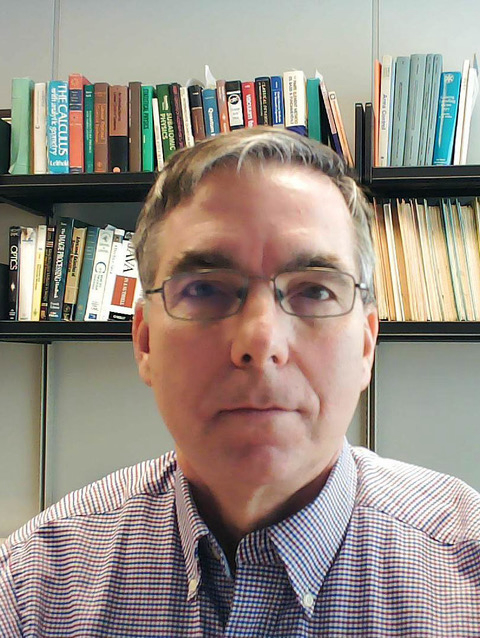
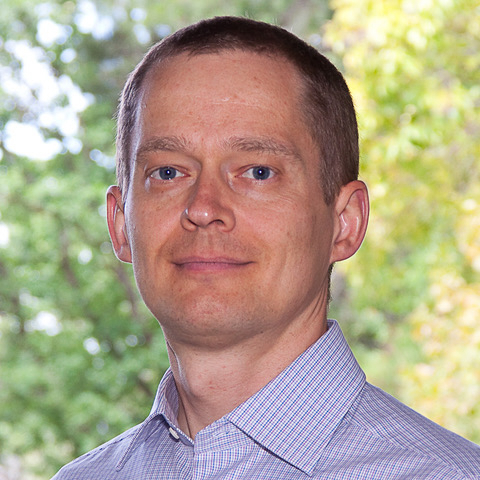
John Villarrubia is a physicist and leader of the Electron-Solid Interactions project in the Physical Measurement Laboratory (PML) at the National Institute of Standards and Technology (NIST). At NIST, he contributed to the Molecular Measuring Machine project, applied mathematical morphological methods to the tip-sample interaction in an STM or AFM to invent the first blind reconstruction method for the determination of tip geometry, and developed JMONSEL, a Monte Carlo simulator that uses a suite of physics models for electron-solid interactions to simulate secondary electron image formation for 3-dimensional samples of arbitrary shape. He is a fellow of the Washington Academy of Sciences, recipient of three SPIE Nyyssonen Metrology best paper awards, a Nanotech Briefs Nano50 Technology Award, and U.S. Department of Commerce Silver and Gold medals.
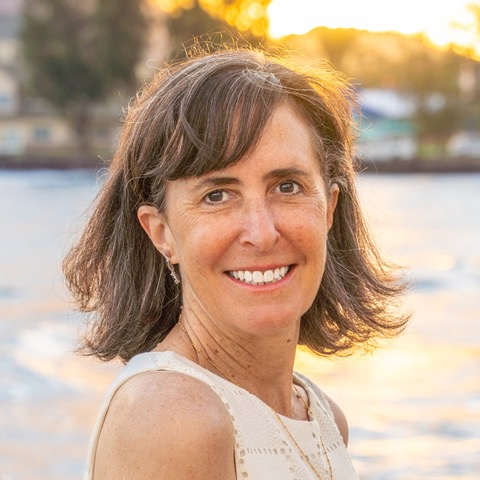
Stacey F. Bent is Jagdeep and Roshni Singh Professor at Stanford University, where she is Professor of Chemical Engineering and of Energy Science and Engineering, and Professor by courtesy of Chemistry, Materials Science and Engineering, and Electrical Engineering. Her research focuses on understanding surface chemistry, materials synthesis, and atomic layer deposition, and applying this knowledge to problems in sustainable energy, microelectronics, and advanced manufacturing. Bent has published over 340 peer-reviewed papers, holds 7 patents, and has presented nearly 400 invited talks. She has supervised 60 Ph.D. students and 35 postdoctoral scholars. Bent was elected to the U.S. National Academy of Engineering in 2020. She is also a Fellow of the American Chemical Society (ACS) and the American Vacuum Society (AVS) and has received various awards for her contributions to surface chemistry, materials engineering and ALD innovation.
Oleg Kostko earned his PhD from the University of Freiburg, Germany, in 2007 and joined Berkeley Lab as a postdoctoral fellow the same year. After a brief period at SRI International studying atmospheric processes, he returned to Berkeley Lab to develop novel soft X-ray spectroscopies for nanoscale systems. At the Center for X-Ray Optics, he advances electron spectroscopy methods to investigate EUV materials, with an emphasis on directly characterizing low-energy electrons involved in EUV patterning. He also develops innovative resist characterization approaches to examine the fundamental processes occurring in photoresists during EUV exposure and post-exposure bake.
Eliška Materna Mikmeková, Ph.D., MBA is Group Leader of the Microscopy and Spectroscopy of Surfaces group at the Institute of Scientific Instruments of the Czech Academy of Sciences in Brno. She specializes in low and ultra-low energy scanning (transmission) electron microscopy (LV S(T)EM) and low-energy electron–matter interactions at surfaces and in two-dimensional materials. Her research combines advanced imaging modes, beam deceleration techniques, and quantitative STEM-in-SEM with spectroscopic methods (XPS, Raman, FTIR) and thin-film deposition (CVD, PECVD, magnetron sputtering) to elucidate structural and electronic properties at the nanoscale.
She previously worked as a Marie Curie Experienced Researcher in the SIMDALEE2 project at Thermo Fisher Scientific, contributing to instrumentation development and in-situ surface treatment methods. In 2021, she was awarded a Fulbright Scholarship at Rutgers University. She leads nationally funded projects on novel contrast mechanisms and quantitative electron microscopy for nanomaterials and advanced nanofabrication.
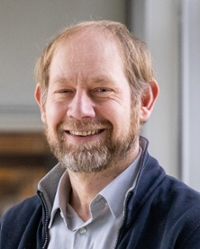
Sense Jan van der Molen is a full professor of physics at Leiden University. His background is in condensed matter physics, specifically metal-insulator transitions, and molecular electronics. In more recent years, he specialized in van der Waals materials, probing these layered systems with low-energy electron microscopy (LEEM) and related techniques, some of which were developed in his lab (eV-TEM, LEEP, ARRES and recently ONEM). His group’s LEEM research on thin organic layers brought a connection to the EUV community, resulting in new research projects and his involvement in the LEELIS conference series. Currently, Van der Molen is the scientific director of the Leiden Institute of Physics.
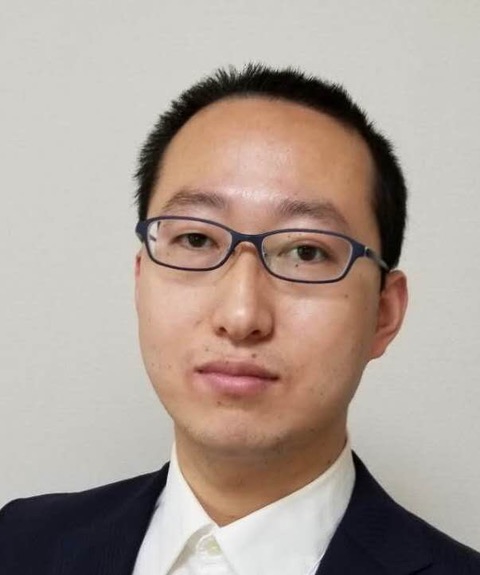
Da Bo received his B.S. and Ph.D. degrees in Physics from the University of Science and Technology of China (USTC) in 2008 and 2013. He is currently a Senior Researcher and Principal Investigator at the National Institute for Materials Science (NIMS), Japan.
His research focuses on electron optics, electron–matter interactions, and electron beam technologies. He has published more than 160 peer-reviewed articles.
He received the NIMS President Award, as well as the 54th Kurata Scholarship from the Hitachi Foundation, the Kao Science Award from the Kao Foundation, and a Single-Year Research Grant from the Ikenati Foundation. He also proposed the official NIMS slogan, “Materials change the world, we create materials.”