Electrons in Lithography and Imaging for
Science and Application
16.-19. NOVEMBER 2026
STYKKISHÓLMUR, ICELAND
Programme Overview
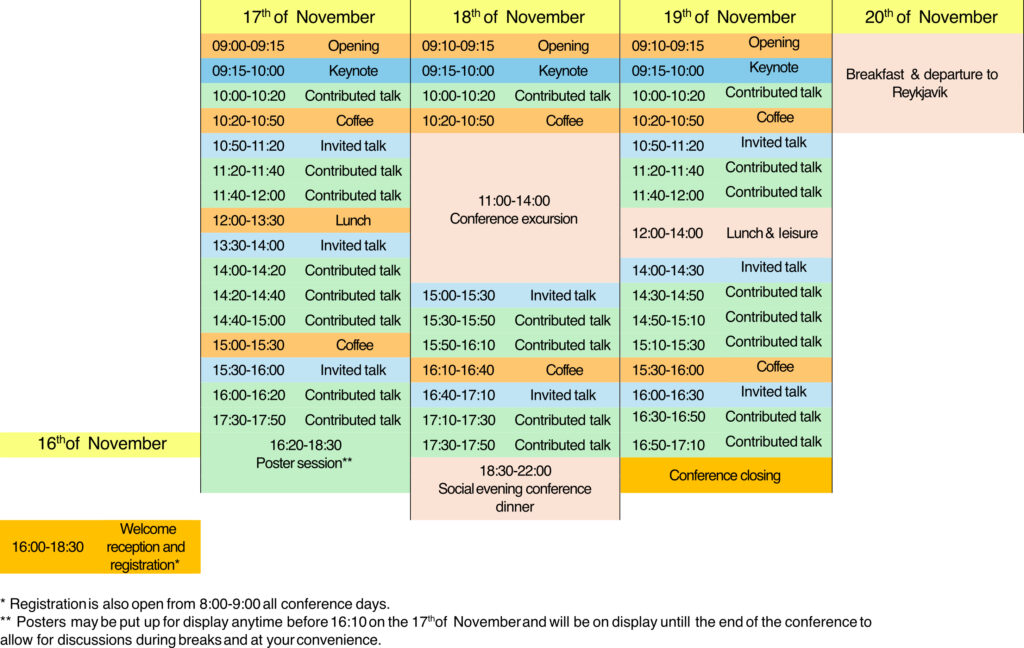
Confirmed Contributions
Keynotes
|
|
|
||
|
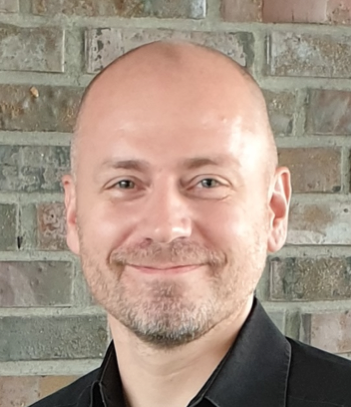
Dr. John S. Villarrubia
|
National Institute of Standards and Technology, MD, USA
|
||
|
From electron-solid interactions to quantitative SEMmetrology: testing the physics from yield to topography
|
|||
|
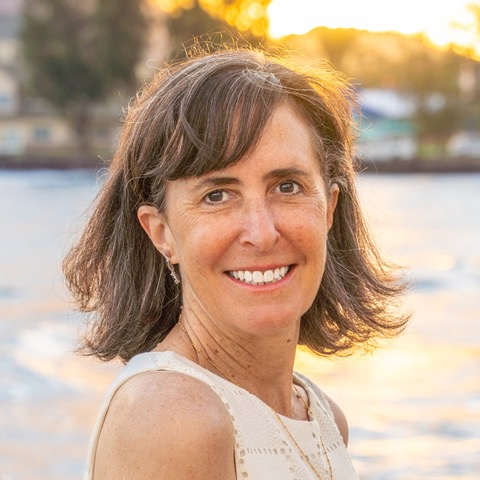
Prof. Stacey Bent
|
Stanford University, Stanford, CA, United States
|
||
|
Molecular Design and Atomic-Scale Control: New Directions in EUV Photoresist Materials and Pattern Enhancement |
|||
|
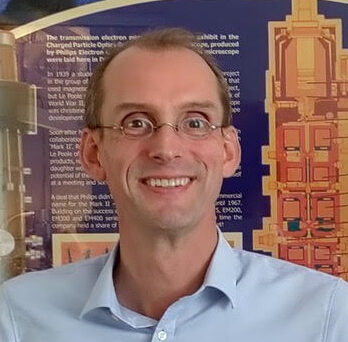
Prof. Timon Fliervoet
|
Technical University Delft and ASML-Research Veldhoven, The Netherlands
|
||
|
Low-Energy Electrons: From Nanometer-Scale EUV Patterning to Metrology and Inspection |
|||
FYRIR SÍMA VIEW
MUNA FYRIR ÞESSA UPPSETNINGU AÐ CONTAINER 1 OG 3 ERU SÝNILEGIR Á TÖLVU OG IPAD EN CONTAINER 2 OG 3 FYRIR SÍMA
National Institute of Standards and Technology
National Institute of Standards and Technology
Title: From electron-solid interactions to quantitative SEMmetrology: testing the physics from yield to topography
Stanford University, Stanford, CA, United States
Stanford University, Stanford, CA, United States
Title: Molecular Design and Atomic-Scale Control: New Directions in EUV Photoresist Materials and Pattern Enhancement
Technical University Delft and Advanced Semiconductor Materials Lithography (ASML) Veldhoven, The Netherlands
Technical University Delft and Advanced Semiconductor Materials Lithography (ASML) Veldhoven, The Netherlands
Title: Low-Energy Electrons: From Nanometer-Scale EUV Patterning to Metrology and Inspection
Invited Speakers
|
|
|
|||
|
Dr. Sven Christian Barth |
Goethe University Frankfurt, Frankfurt, Germany |
|||
|
From Molecule to Nanostructure by Direct-Write Nanofabrication: Fundamental Beam–Material Interactions and Precursor Design
|
||||
|
Dr. Jakub Mateusz Jurczyk |
Technical University Vienna, Vienna, Austria |
|||
|
3D nanoprinting with electrons: shape, composition and in-situ process analysis |
||||
|
Dr. Eliška Mikmeková |
Institute of Scientific Instruments of the Czech Academy of Science (ISI) Brno, Czech Republic |
|||
|
Low-Energy Electron Microscopy of 2D Materials: From Graphene to Electron Microscopy Applications |
||||
|
Prof. Philip D. Rack |
University of Tennessee, Department of Material Science and Engineering, Knoxville TN, USA |
|||
|
Focused Electron Beam Induced Etching of Superconducting and Semiconducting Materials and Devices |
||||
|
Prof. Sense Jan van der Molen |
Leiden University, Leiden, The Netherlands |
|||
|
Investigating EUV resists with low-energy electrons |
||||
|
Prof. Bo Da |
University of Science and Technology of China, Hefei, P.R. China |
|||
|
Correlated Electron-Matter Interactions: From Inelastic Scattering to Beam Focusing via Rotationally Structured Crystals |
||||
|
Prof. Howard Fairbrother |
Johns Hopkins University, Baltimore, Maryland, USA |
|||
|
Role of Low-Energy Electrons in All-Dry Processing Strategies for Semiconductor Technologies |
||||
|
Dr. Mohamed Belhaj |
Office National d’Études et de Recherches Aérospatiales, Toulouse, France |
CV |
||
|
|
Abstract |
|||
FYRIR SÍMA VIEW
MUNA FYRIR ÞESSA UPPSETNINGU AÐ CONTAINER 1 OG 3 ERU SÝNILEGIR Á TÖLVU OG IPAD EN CONTAINER 2 OG 3 FYRIR SÍMA
Goethe University Frankfurt, Frankfurt, Germany
Goethe University Frankfurt, Frankfurt, Germany
Title: From Molecule to Nanostructure by Direct-Write Nanofabrication: Fundamental Beam–Material Interactions and Precursor Design
Technical University Vienna, Vienna, Austria
Technical University Vienna, Vienna, Austria
Title: 3D nanoprinting with electrons:shape, composition and in-situ process analysis
Institute of Scientific Instruments of the Czech Academy of Science (ISI) Brno, Czech Republic
Institute of Scientific Instruments of the Czech Academy of Science (ISI) Brno, Czech Republic
Title: Low-Energy Electron Microscopy of 2D Materials: FromGraphene to Electron Microscopy Applications
University of Tennessee, Department of Materials Science and Engineering, Knoxville TN, USA
University of Tennessee, Department of Materials Science and Engineering, Knoxville TN, USA
Title: Focused Electron Beam Induced Etching of Superconducting and Semiconducting Materials and Devices
Leiden University, Leiden, The Netherlands
Leiden University, Leiden, The Netherlands
Title: Investigating EUV resists with low-energy electrons
University of Science and Technology of China, Hefei, P.R.China
University of Science and Technology of China, Hefei, P.R.China
Title: Correlated Electron-Matter Interactions: From Inelastic Scattering to Beam Focusing via Rotationally Structured Crystals
Johns Hopkins University, Baltimore, Maryland, USA
Johns Hopkins University, Baltimore, Maryland, USA
Title: Role of Low-Energy Electrons in All-Dry Processing Strategies for Semiconductor Technologies
Dr. Mohamed Belhaj
Office National d'Études et de Recherches Aérospatiales, Toulouse, France
Dr. Mohamed Belhaj
Office National d'Études et de Recherches Aérospatiales, Toulouse, France
LAGA!!!Title: Role of Low-Energy Electrons in All-Dry Processing Strategies for Semiconductor Technologies
Contributed Talks
|
|
|
||
|
Ms. Alix Tatiana Escalante-Quiceno |
INMA (CSIC – Universidad de Zaragoza), Spain
|
||
|
Focused Electron and Ion Beam Processing for High-Resolution AFM and MFM Probes
|
|||
|
Dr. Adam Hrdý |
Thermo Fisher Scientific, Brno, Czechia
|
||
|
Chemistry Assisted Delayering of Advanced Semiconductor Devices Using MultiChem |
|||
|
Prof. Amalio Fernández-Pacheco |
Institute of Applied Physics, TU Wien, Vienna, Austria
|
||
|
Electron-beam 3D nanoprinting: open-source patterning and functional magnetic nanoarchitectures |
|||
|
Prof. Armin Gölzhäuser |
Bielefeld University, Bielefeld, Germany
|
||
|
Carbon Nanomembranes: Radiation-induced 2D Materials for Separation |
|||
|
Prof. David J. Lewis |
Department of Chemistry, University of Manchester, U.K.
|
||
|
E-Beam Lithography of Topological Insulators: Nanoscale Bismuth(III) Selenide Written Directly from a Single-Source Precursor |
|||
|
Dr. Fabian Holzmeier |
IMEC, Leuven, Belgium
|
||
|
More is not always better: Dissociative photoionization limits the EUV absorbing photoacid generator pentafluorophenyl triflate in photolithography |
|||
|
Mr. Giel T. B. Coemans |
Delft University of Technology, The Netherlands
|
||
|
Predicting SEM Charging Artefacts in Semiconductor Structures Using a Dynamic Charge Balance Model |
|||
|
Dr. Georghii Tchoudinov |
School of Science and Technology, University of Camerino, Italy CNR – Istituto Officina dei Materiali (IOM), Trieste, Italy |
||
|
Role of the electron Inelastic Mean Free Path in x-rayphotoemission and x-ray absorption spectroscopy of solid copper |
|||
|
Dr. Ivo Utke |
Swiss Federal Laboratories for Materials Science and Technology (EMPA), Thun, Switzerland
|
||
|
The fate of metalorganic molecule ligandsin e-nanoprinting |
|||
|
Dr. Jaroslav Kočišek |
Heyrovský Institute of the CAS, Prague, Czechia
|
||
|
Reactivity of Low-Energy Electrons and Ions with Molecular Clusters Relevant to Nano-Manufacturing |
|||
|
Dr. Joannis Koepsell |
Carl Zeiss SMT GmbH, Rossdorf, Germany
|
||
|
Semiconductor mask repair with focused electron-beam induced processing |
|||
|
Dr. Katja Höflich |
Ferdinand-Braun-Institut (FBH), Berlin, Germany
|
||
|
Electron beam seeding as a new tool for area-selective deposition of gold |
|||
|
Dr. Leo Sala |
Heyrovský Institute of the CAS, Prague, Czechia
|
||
|
Electron microscopy of DNA nanostructures and their hybrid assemblies |
|||
|
Prof. Lisa McElwee-White |
Department of Chemistry, University of Florida, Gainesville, USA
|
||
|
Mechanism-Based Design, Synthesis, and Characterization of a Small Molecule Inorganic Photoresist Candidate for EUV Lithography |
|||
|
Prof. Mattia Fanetti |
Materials Research Laboratory, University of Nova Gorica, Ajdovščina, Slovenia
|
||
|
E-beam local heating with SEM: a new tool fore-beam nanopatterning |
|||
|
Mr. Nicolas P. Jochmann |
Goethe University Frankfurt, Germany
|
||
|
Precursor development for charged particle deposition:Case studies based on Nb and Ta |
|||
|
Dr. Paul Cannon |
Advanced Research Center for Nanolithography (ARCNL), Amsterdam, The Netherlands
|
||
|
Optical Measurements of Electric Fields for Electron Microscopy Applications |
|||
|
Dr. Phay J. Ho |
Argonne National Laboratory, Lemont, IL, USA
|
||
|
Modeling of fundamental mechanisms initiated x-ray irradiation: from atomic to nanometer scales |
|||
|
Prof. Wolfgang S. M. Werner |
TU Wien, Institute of Applied Physics, Vienna, Austria
|
||
|
Electronic doorway states as efficient secondary electron escape channels in layered graphitic materials |
|||
FYRIR SÍMA VIEW
Poster Presentations
|
|
|
||
|
Dr. Alessandra Bellissimo
|
Photonics Institute, TU Wien, Austria, and HUN-REN Wigner Research Centre for Physics, Budapest, Hungary |
||
|
Momentum-Resolved Low-Energy Electron Emission from Crystalline Graphite: From Direct Photoemission to Secondary Cascades and Doorway States
|
|||
|
Mr. Alexander Bauer |
Institute of Electron Microscopy and Nanoanalysis, Graz University of Technology, Austria
|
||
|
Non-Contact Mechanical Characterization of FEBID Nanopillars through Resonance Frequency Analysis and Automated Geometry Reconstruction |
|||
|
Prof. Anpan Han |
Technical University of Denmark, Kongens Lyngby, Denmark |
||
|
Ice Lithography progress between 2020 and 2026, and perspectives |
|||
|
Mr. Devey Singh Rathore |
Delft University of Technology, Delft, The Netherlands
|
||
|
In-situ measurement of electron beam-induced surface potentials in a scanning electron microscope |
|||
|
Mr. Dominik Schramm |
TU Wien, Vienna Austria
|
||
|
Predicting high-aspect-ratio FEBID deposit shapes by incorporating evolving geometry into continuum models |
|||
|
Dr. Ekaterina Shabratova |
Ferdinand-Braun-Institut (FBH), Berlin, Germany
|
||
|
Printing into Nowhere: Self-Formation of the Transition Region During Localized Electrochemical Copper Deposition onto a Partially Metallized Glass Substrate |
|||
|
Mr. Hans Keur |
Delft University of Technology, Delft, The Netherlands
|
||
|
Towards the Simulation of Scanning Electron Microscopy Images of Charging Samples |
|||
|
Prof. Harald Plank |
Graz University of Technology, Graz, Austria
|
||
|
MC Fusion Probes: 3D-Nanoprinted Co₃Fe Nanoprobes for
Simultaneous Magnetic and Conductive AFM
|
|||
|
Direct-Write Fabrication of Ultrathin Nb–Based Memristive
Devices via FEBID
|
|||
|
Functional Imprinting: Post-Growth Programming of
Plasmonic Domains in FEBID-based Au-C Matrices
|
|||
|
Understanding and Eliminating Sidewall Roughness in 3D Nanoprinting via Focused Ion Beam Induced Deposition |
|||
|
Mr. Jianyao Jin |
Imaging Physics, Delft University of Technology, Delft, The Netherlands
|
||
|
Model Sensitivity Studies in Low Energy Electron-Matter Interaction Simulations |
|||
|
Dr. Juraj Országh |
Comenius University Bratislava, Slovakia |
||
|
Electron induced fluorescence as a tool for detecting neutral fragments |
|||
|
Mr. Michael Schlegel |
Institute of Applied Physics, University of Tübingen, Germany
|
||
|
Nano-Structuring of 2D Materials using the Scanning Transmission Electron Microscope |
|||
|
Dr. Miloš Ranković |
Heyrovsky Institute of the Czech Academy of Sciences, Prague, Czech Republic
|
||
|
Electron interactions with liquid micro-jets: Reactivity and Spectroscopy |
|||
|
Mr. Noud van Halteren |
Leiden University, Leiden, The Netherlands
|
||
|
Low-energy electron exposure of trinuclear tin complex EUV resist |
|||
|
Dr. Pamir Nag |
Heyrovsky Institute of the Czech Academy of Sciences, Prague, Czech Republic
|
||
|
Gas-phase Fragmentation and Dissociation Dynamics of Novel Iron FEBID Precursors |
|||
|
Prof. Petra Swiderek |
University of Bremen, Bremen, Germany
|
||
|
Chemistry of deposit formation in FEBID studied
by reflection absorption infrared spectroscopy,
desorption experiments and Auger electron spectroscopy
|
|||
|
Electron-induced and thermal surface reactions of iron precursors for FEBID |
|||
|
Dr. Rosa Córdoba |
Institute of Molecular Science (ICMol), Universitat de València, Spain
|
||
|
Helium-Ion-Beam Direct Writing of a 3D Superconducting Nanohelix with Angle-Dependent Magnetotransport |
|||
|
Ms. Rutisha Kotian |
Centre of Excellence for Computational Science and Simulation, Somaiya Vidyavihar University, India
|
||
|
Reaction Pathway and Mechanistic Insights into Low-Energy Electron-Induced Conversion of Toluene to Acetylene |
|||
|
Mr. Simon Lamprecht |
Institute of Electron Microscopy, Graz University of Technology, Austria
|
||
|
Multi-Ion FIBID for 3D Direct-Write Nanomanufacturing and Functional Imprinting |
|||
|
Mr. Vasil Yordanov |
KU Leuven, Belgium
|
||
|
Determining inelastic mean-free path of low-energy (<100eV) electrons in optical and electron photoresists |
|||
|
Prof. Viatcheslav Kokoouline |
Laboratoire Kastler Brossel, ENS-Université PSL, Paris, France |
||
|
Theoretical cross sections for rotationally and electronically inelastic and elastic processes in electron-HF scattering |
|||
|
Ms. Wentao Zhang |
Ferdinand-Braun-Institut (FBH), Berlin, Germany
|
||
|
Unraveling Electron-Induced Dissociation and Molecule-Surface Kinetics for 3D Nano-printing of Photonic Quantum Elements |
|||
FYRIR SÍMA VIEW
|
Dr. Alessandra Bellissimo |
Photonics Institute, TU Wien, Austria |
Momentum-Resolved Low-Energy Electron Emission from
Crystalline Graphite: From Direct Photoemission to
Secondary Cascades and Doorway States |
|
|
Mr. Alexander Bauer |
Institute of Electron Microscopy and Nanoanalysis, Graz University of Technology, Austria |
||
|
Mr. Devey Singh Rathore |
Delft University of Technology, Delft, The Netherlands |
||
|
Mr. Dominik Schramm |
TU Wien, Vienna Austria |
||
|
Dr. Ekaterina Shabratova |
Ferdinand-Braun-Institut (FBH), Berlin, Germany |
||
|
Mr. Hans Keur |
Delft University of Technology, Delft, The Netherlands |
||
|
Prof. Harald Plank |
Graz University of Technology, Graz, Austria |
||
|
Mr. Jianyao Jin |
Delft University of Technology, fac. Applied Sciences, dept. Imaging Physics, Lorentzweg 1,
2628 CJ Delft, The Netherlands |
||
|
Mr. Michael Schlegel |
Institute of Applied Physics, University of Tübingen, Germany |
||
|
Dr. Miloš Ranković |
Heyrovsky Institute of the Czech Academy of Sciences, Prague, Czech Republic |
||
|
Mr. Noud van Halteren |
Leiden University, Niels Bohrweg 2, 2333 CA Leiden, The Netherlands |
||
|
Dr. Pamir Nag |
Heyrovsky Institute of the Czech Academy of Sciences, Prague, Czech Republic |
||
|
Prof. Petra Swiderek |
University of Bremen, Leobener Str. 5, 28359 Bremen, Germany |
||
|
Dr. Rosa Córdoba |
Institute of Molecular Science (ICMol), Universitat de València, Spain |
||
|
Ms. Rutisha Kotian |
Centre of Excellence for Computational Science and Simulation, Somaiya Vidyavihar University, India |
||
|
Mr. Simon Lamprecht |
Institute of Electron Microscopy, Graz University of Technology,Austria |
||
|
Mr. Vasil Yordanov |
KU Leuven, Belgium |
||
|
Mr. Wentao Zhang |
Ferdinand-Braun-Institut (FBH), Gustav-Kirchhoff-Str. 4, 12489, Berlin, Germany |
HÉR FYRIR NEÐAN ER UPPSETNING FYRIR CONTRIBUTED TALKS (20STK) EINS OG ER SETT UPP FYRIR KEYNOTE OG INVITED TALKS – MIÐJUDÁLKURINN FYRIR HVERT UNIT ER FYRIR MOBILE VIEW – MUNA AÐ LAGA FYRIR MOBILE VIEW
Johns Hopkins University, Baltimore, Maryland, USA
Johns Hopkins University, Baltimore, Maryland, USA
Title: Role of Low-Energy Electrons in All-Dry Processing Strategies for Semiconductor Technologies
Johns Hopkins University, Baltimore, Maryland, USA
Johns Hopkins University, Baltimore, Maryland, USA
Title: Role of Low-Energy Electrons in All-Dry Processing Strategies for Semiconductor Technologies
Johns Hopkins University, Baltimore, Maryland, USA
Johns Hopkins University, Baltimore, Maryland, USA
Title: Role of Low-Energy Electrons in All-Dry Processing Strategies for Semiconductor Technologies
Johns Hopkins University, Baltimore, Maryland, USA
Johns Hopkins University, Baltimore, Maryland, USA
Title: Role of Low-Energy Electrons in All-Dry Processing Strategies for Semiconductor Technologies
Johns Hopkins University, Baltimore, Maryland, USA
Johns Hopkins University, Baltimore, Maryland, USA
Title: Role of Low-Energy Electrons in All-Dry Processing Strategies for Semiconductor Technologies
Johns Hopkins University, Baltimore, Maryland, USA
Johns Hopkins University, Baltimore, Maryland, USA
Title: Role of Low-Energy Electrons in All-Dry Processing Strategies for Semiconductor Technologies
Johns Hopkins University, Baltimore, Maryland, USA
Johns Hopkins University, Baltimore, Maryland, USA
Title: Role of Low-Energy Electrons in All-Dry Processing Strategies for Semiconductor Technologies
Johns Hopkins University, Baltimore, Maryland, USA
Johns Hopkins University, Baltimore, Maryland, USA
Title: Role of Low-Energy Electrons in All-Dry Processing Strategies for Semiconductor Technologies
Johns Hopkins University, Baltimore, Maryland, USA
Johns Hopkins University, Baltimore, Maryland, USA
Title: Role of Low-Energy Electrons in All-Dry Processing Strategies for Semiconductor Technologies
Johns Hopkins University, Baltimore, Maryland, USA
Johns Hopkins University, Baltimore, Maryland, USA
Title: Role of Low-Energy Electrons in All-Dry Processing Strategies for Semiconductor Technologies
Johns Hopkins University, Baltimore, Maryland, USA
Johns Hopkins University, Baltimore, Maryland, USA
Title: Role of Low-Energy Electrons in All-Dry Processing Strategies for Semiconductor Technologies
Johns Hopkins University, Baltimore, Maryland, USA
Johns Hopkins University, Baltimore, Maryland, USA
Title: Role of Low-Energy Electrons in All-Dry Processing Strategies for Semiconductor Technologies
Johns Hopkins University, Baltimore, Maryland, USA
Johns Hopkins University, Baltimore, Maryland, USA
Title: Role of Low-Energy Electrons in All-Dry Processing Strategies for Semiconductor Technologies
Johns Hopkins University, Baltimore, Maryland, USA
Johns Hopkins University, Baltimore, Maryland, USA
Title: Role of Low-Energy Electrons in All-Dry Processing Strategies for Semiconductor Technologies
Johns Hopkins University, Baltimore, Maryland, USA
Johns Hopkins University, Baltimore, Maryland, USA
Title: Role of Low-Energy Electrons in All-Dry Processing Strategies for Semiconductor Technologies
Johns Hopkins University, Baltimore, Maryland, USA
Johns Hopkins University, Baltimore, Maryland, USA
Title: Role of Low-Energy Electrons in All-Dry Processing Strategies for Semiconductor Technologies
Johns Hopkins University, Baltimore, Maryland, USA
Johns Hopkins University, Baltimore, Maryland, USA
Title: Role of Low-Energy Electrons in All-Dry Processing Strategies for Semiconductor Technologies
Johns Hopkins University, Baltimore, Maryland, USA
Johns Hopkins University, Baltimore, Maryland, USA
Title: Role of Low-Energy Electrons in All-Dry Processing Strategies for Semiconductor Technologies
Johns Hopkins University, Baltimore, Maryland, USA
Johns Hopkins University, Baltimore, Maryland, USA
Title: Role of Low-Energy Electrons in All-Dry Processing Strategies for Semiconductor Technologies
Johns Hopkins University, Baltimore, Maryland, USA
Johns Hopkins University, Baltimore, Maryland, USA
Title: Role of Low-Energy Electrons in All-Dry Processing Strategies for Semiconductor Technologies